A rug is a critical element in the design of a room. It serves multiple functions:
1. It helps define seating and dining areas and can be used to break up large spaces to create visual order and tie furniture pieces together.
2. It creates visual and physical warmth.
3. It can add beauty and style through color, pattern and texture.
4. It improves acoustics by absorbing and reducing ambient noise.
5. A rug serves as “artwork for the floor.” It should evoke a positive emotional response when you and your guests see it.
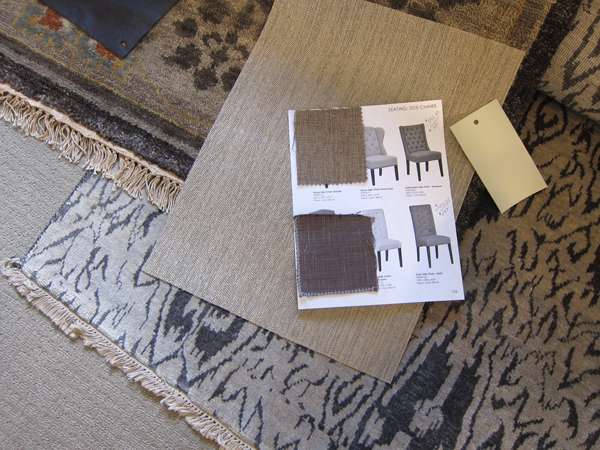
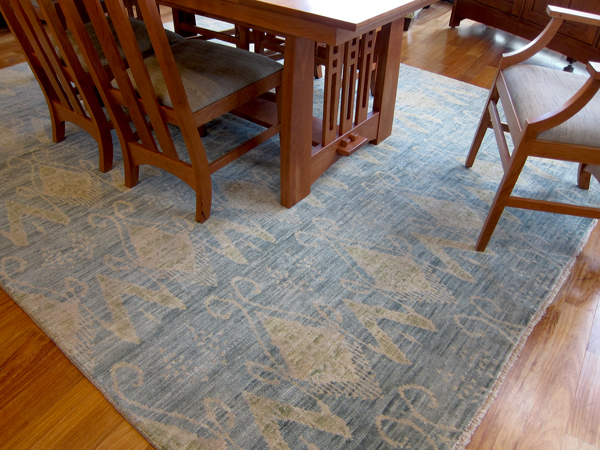
Once a furniture plan has been established for a design project with your Toms-Price Designer, it’s advantageous to begin by selecting the rug. If you can, bring measurements of the room (or rooms) with you to discuss the space with your Designer or Rug Specialist to determine the correct rug size, based on the room size and furniture placement. The rug should be proportional to the setting– not too small and not too large.
Besides rectangular, rugs are available in various shapes and sizes, including: round, oval, square, hexagonal and octagonal. It’s better to place a round dining table on a round or square rug. Always allow a minimum of 24” around the perimeter of a dining table for the chairs.
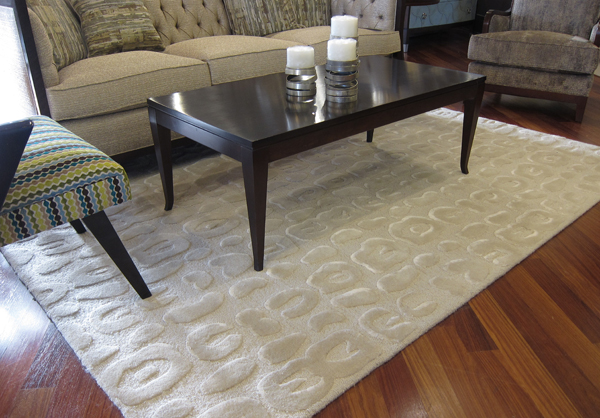
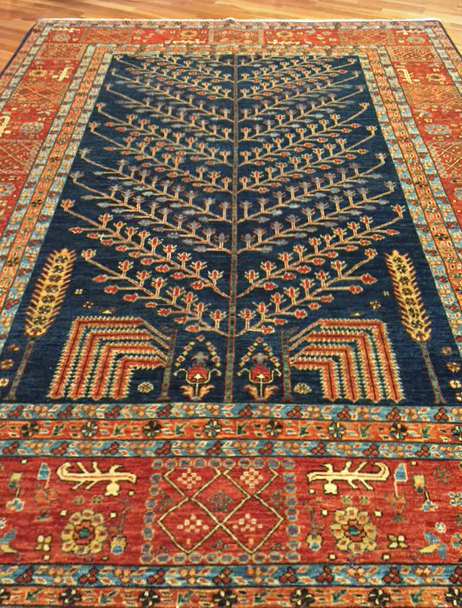
There are four major styles of rugs:
Some clients prefer to stay within the style of their furniture. They would be considered “purists.” For example, clients with Arts & Crafts style furniture may only want to use an Arts & Crafts style rug. Others, who are more eclectic in their style, may choose a Transitional or Contemporary rug.
Also, with rooms becoming less formal, Transitional and even Contemporary rugs are trendy. A Toms-Price professional can help you pick the rug that’s right for you!
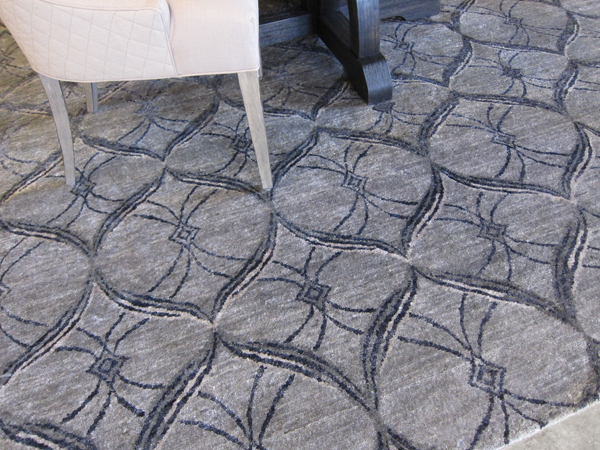
A multitude of exciting rug colors and combinations are available. What’s hot now? All variations of the color gray are extremely popular, as well as fresh colors that are relevant in home fashion. Designers, websites and magazine are heralding gray as the “new neutral.”
Rugs are available in a variety of price points based on fiber content and construction.
They can be made of wool, wool/silk, faux silk (viscose, bamboo or banana silk), nylon, linen, sisal, jute and more. If you’re concerned with ease of cleaning, durability and longevity, wool is the best choice. Rugs made of viscose are becoming more prevalent in the marketplace, however, it is much better to have this fiber blended with wool for durability and resiliency. Although sisal is aesthetically pleasing and seen in many design publications, it is not easily cleaned.
Rugs can be handmade or machine-made. Here are some things you should know about these two types of rugs:
1. Handmade rugs are either hand-knotted or tufted. There are different quality levels in both categories. The tufted rugs are more reasonably priced because they are less labor intensive to make and generally last 8-10 years. Tufted rugs are a good choice for low traffic areas. People who enjoy changing room decor often may opt for tufted rugs, due to their low cost. Hand-knotted rugs are a wonderful investment, many of them lasting as long as 50-90 plus years. The only rugs that have become “antiques” are hand-knotted.
2. Machine-made rugs can be manufactured faster in custom sizes with a large selection of color choices and designs. Generally, the cost is lower than hand-knotted rugs.
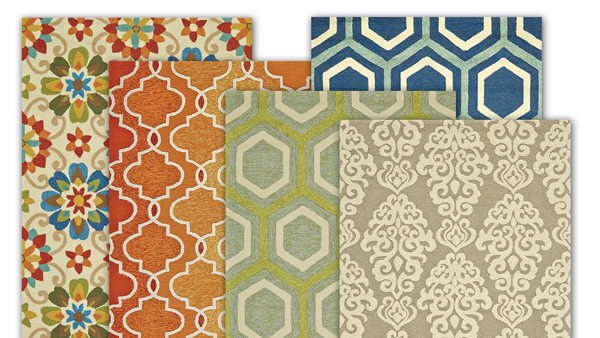
Rugs can be placed in every room of the house, as well as in foyers, hallways, staircases and basements. A growing trend is using rugs in outdoor areas. Outdoors rugs are versatile, too. They can be used year-round, both indoors and outdoors, resulting in you getting more for your money!
There are four basic reasons:
1. Safety. A rug pad keeps the rug in place to prevent slips and pulls, no matter if the rug is placed on carpet, hardwood, tile, etc.
2. Longevity. It extends the life of a rug by preventing the fibers from being crushed. This is especially true for entry-level and lower quality rugs. A rug pad also acts as a type of buffer between the hard surface below and the rug above.
3. Protection. A rug pad prevents dye transfer, marring, staining and scratching to the floor or carpeting beneath.
4. Comfort. It adds a more cushioned feeling underfoot.
Did you know that there are different pad types? There are pads for rugs that are placed on hard surfaces, and there are other pads for rugs placed on top of carpeting.
There are two “don’ts” in regard to rug pads:
1. Do not use mesh/waffle pads as they contain chemicals and disintegrate, ruining the floor surface and the backs of rugs.
2. Pads should never be used on flooring with radiant heat.
At Toms-Price, you won’t have to worry about any of these details because our professional consultants are experienced in all facets of your rug and furniture needs. Come in today to talk with a designer or rug specialist. We are happy to help!
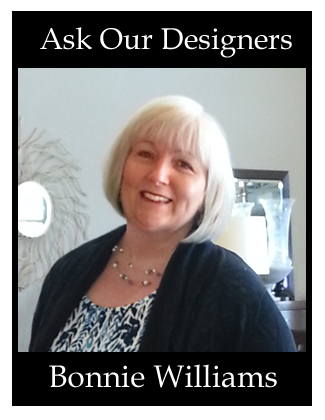
These rug buying tips are from Bonnie Williams, an interior designer at Toms-Price in Old Orchard. Barbara Parker, who has also contributed to this post, is a rug specialist at the same location.
Please call any of our locations and ask for the Rug Gallery. Old Orchard: 847.675.9400, Lincolnshire: 847.478.1900, So. Barrington: 847.783.1500, Wheaton: 630.668.7878
Questions which appear on ASK OUR DESIGNERS are answered by members of Toms-Price’s professional design staff. If you have a design question you’d like answered or a have a comment, please email: [email protected]. Be sure to put “MEET OUR DESIGNERS” in the subject line.
Save
Save
